Stackt Market: Reimaging an Urban Marketplace
The Goal:
Developing a Food & Beverage Strategy for a new public space in the heart of Toronto. That is a Culinary and Cultural Community Hub
Getting Started
When a major urban developer set out to transform an under utilized site into a vibrant new community hub, they partnered with our consulting firm to design a cohesive Food & Beverage (F&B), programming, and placemaking strategy that would differentiate the destination, attract repeat visits, and reflect the neighbourhood’s cultural identity.
The hub aimed to be more than a destiation—it needed to become a daily gathering place for Torontonians a catalyst for local business incubation, and a platform for community expression.
Our Role & Approach
We led the project from visioning through execution, ensuring every touchpoint—from tenant mix to seasonal programming—worked together as one system.
Integrated Food & Beverage Strategy
We created a tiered F&B plan designed to serve the community while anchoring traffic.
KEY ACTIONS:
Identified the right mix of everyday essentials (coffee, grab-and-go, family-friendly options) and destination offerings (chef-led concepts, culinary pop-ups, cultural food events).
Designed an incubator-style program for emerging food entrepreneurs, giving them low-risk entry points through stalls, carts, and seasonal kiosks.
Mapped daily and seasonal demand patterns to ensure offerings aligned with how people actually use the space—weekday routines, weekend peaks, and evening community events.
Vision & Positioning
We developed the core strategic narrative:
A welcoming community anchor with year-round activity
A hub that champions local makers, food entrepreneurs, and cultural expression
A destination that invites residents to gather, learn, eat, and participate
This narrative guided all decisions, ensuring cohesion across F&B, retail, programming, and public space design.
Space Planning & Operational Alignment
We ensured the physical layout supported the strategy:
Optimized circulation and seating to create natural gathering zones.
Integrated F&B into high-flow areas to boost visibility and accessibility.
Supported back-of-house efficiencies and shared infrastructure for small vendors.
Advised on technology, waste management, and sustainability to align with the hub’s values.
Programming & Community Activation
We built a programming ecosystem that layered culture, nature, food, and movement into the experience.
Examples:
Seasonal markets and tasting events
Local artist residencies and exhibitions
Family-friendly workshops and community classes
Health and wellness activations (yoga, forest-inspired experiences, guided walks)
Partnerships with schools, nonprofits, and local cultural groups
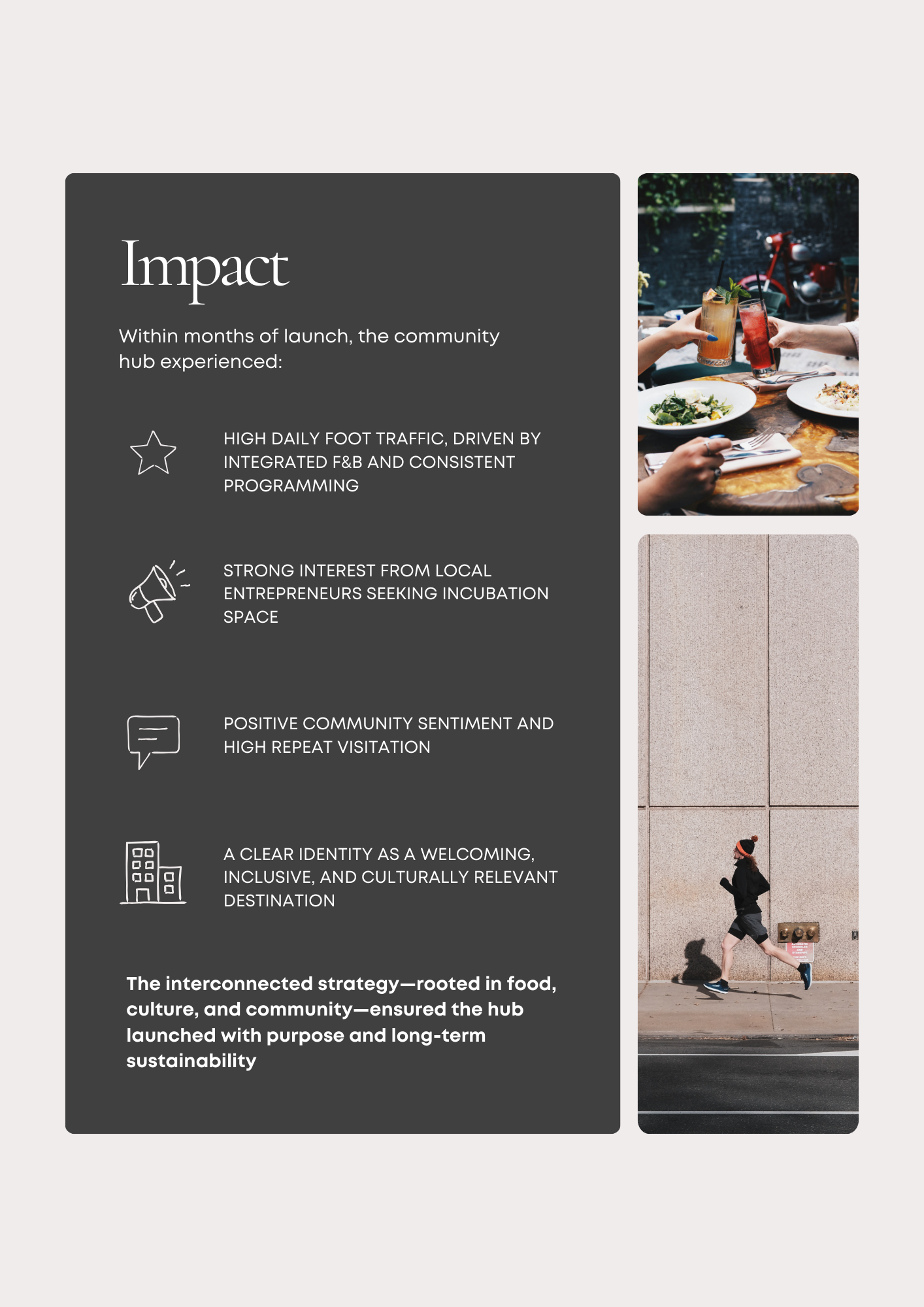
This ensured that the community hub wasn’t just a place to eat—it became a place to belong.
Revenue Model & Partnership Strategy
We developed a diversified revenue plan combining:
F&B leasing and percentage rents
Event programming
Community partnerships
Sponsorship opportunities tied to social impact and local culture
“Our partnership framework clarified expectations around space-in-kind, marketing support, programming responsibilities, and community benefits.”